Sydney Laid Bare
October 3, 2024
Australia’s heat—the welcomed bare feet on streets and in supermarket aisles, would seem to entertain a certain cultural predisposition for nudism, but we stop short of it. A hypocritical and deeply Australian modesty has rarely allowed us to look past the image of ‘pervy’ old men hiding in the sand dunes to understand the true intentions of nudism. While these men certainly exist, the singular intention of body-positivity within nudism holds more gravity than we care to recognise. Particularly so, in the face of modern beauty standards and ongoing debate over female bodily autonomy.

For many First Nations People, nudism was not a social or political statement, but rather a necessity of climate. The colonisation of Australia and the consequent colonisation of the body introduced clothing as an instrument of European ‘modesty’ and clear display of social class. The introduction of European clothing was a powerful tool of cultural assimilation. The forced abandonment of Indigenous clothing and ornamentation discarded centuries worth of culture. Nakedness and the incompatible force of colonialism, cast Indigenous populations as the immoral ‘naked savage’, a history that remains embedded in what author Ruth Barcan views as modern Australia’s resistant attitude to recreational nudism.
European settlers began to swim naked for the same reason as Indigenous Australians; swimming trunks weren’t readily available, and it was simply too hot. The practice of nude bathing emerged amongst white Australians at Woolloomooloo Bay in the 1830’s, resulting in bans on daytime bathing at most of Sydney’s beaches. The bans were later replaced with modesty restrictions that were enforced to varying degrees by patrolling ‘nuisance inspectors’, in an attempt to ensure that swimming costumes sufficiently covered the body and that there was no mixed-gender bathing.
There were rather varied attitudes towards nudism through the late 1800’s, with the Mayor of Manly, John Cameron, instructing inspectors to ignore nude bathers before 7am. However, attitudes shifted by the turn of the century and an overwhelming Christian puritan sentiment amongst Sydney’s middle-class marked the display of skin by even modest swimming costumes, as ‘sinful’. Manly and Randwick councils banned bathing of any sort after 8am, although this was overturned in 1903.
The ‘science of bathing’ emerged within Australian public discourse through the 1910’s, with medical practitioners promoting the therapeutic benefits of sand, surf and sunshine. This garnered a tension across Sydney’s middle-class beachgoers, who struggled to reconcile their Christian puritan notions of ‘modest’ dress, with desires to expose more of their bodies to the sun through smaller swimming costumes such as women’s brassieres and men’s trunks. The athletic, brown-skinned Australian character became easily recognisable in popular culture works such as Charles Meere’s enigmatic painting Australian beach pattern (1940).
Recreational nudism emerged in Sydney in the 1920’s, when several highly illegal and secretive nudist clubs were in operation for short periods of time. The first official nudist club to survive for longer than a year, was the New South Wales Sun and Country Club, founded by Balgowlah resident and nudism pioneer Ron Ashworth. When nudism clubs exploded in popularity after the second world war, Ashworth began the construction of a clubhouse near Frenchs Forest. The £10.10 membership fee for the NSWSCC, a large amount of money for the time, would deter, ‘the curious, the uneducated and the undesirable’.
Ashworth is also credited with beginning Australia’s first ever nudist magazine, The Australian Sunbather. The magazine was printed and distributed by the Manly Daily, although ceased publication after its first edition in 1946, when the shop girls refused to sell what they deemed pornographic material.
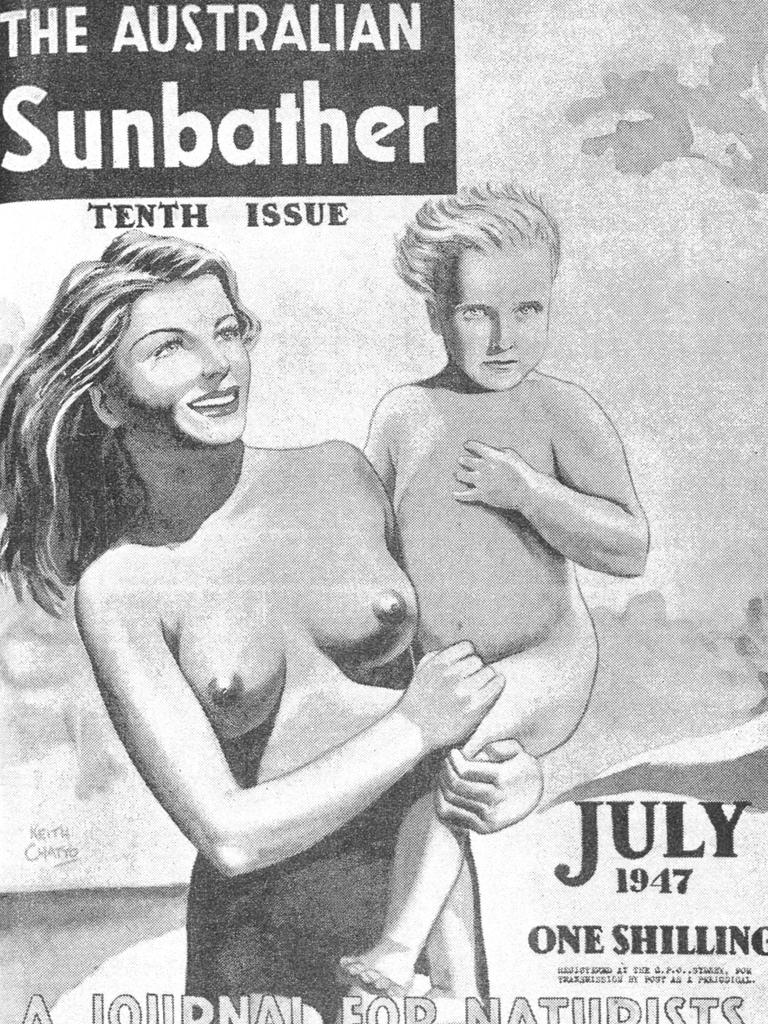
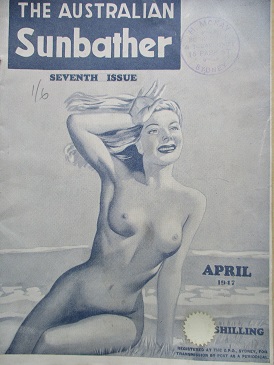
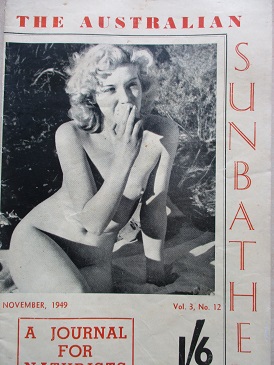
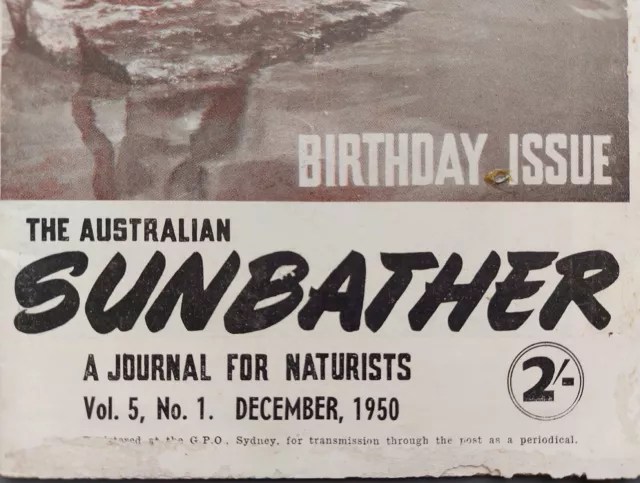
A national body of the Australian Naturist Federation was founded in 1968 with the intention to promote nudism on a national scale and foster the growth of local nudist clubs through social and sporting events. Sydney nudist and current treasurer of the Australian Naturist Federation, Gavin Glenn, emphasises a principal focus upon body positivity within the organisation’s history.
‘There’s lots of negative media around people’s bodies. Naturism is a good way to come to terms with the fact that everyone’s body is different, and you should be comfortable with that,’ he says.
‘Some people just like freedom of being outdoors in nature… naked.’
The community of nudists who attend Sydney’s nude beaches during the city’s summers, report an overwhelming demographic of older men that can be quite intimidating for young women. However, Glenn says that more organised nudism events offer a space for both men and women to become involved.
‘The problem is that there’s no restrictions at beaches on who can be there, whereas if you go into clubs and resorts there’s more oversight on how people behave. There are a lot more women involved, although we tend to skew a bit older with age groups.’
Glenn highlights an important aspect of the more organised sphere of Sydney’s nudism scene, one that has allowed naturism to become synonymous with the concept of a midlife crisis.
‘There’s plenty of younger nudists around, they’re just not willing to be involved with an organisation,’ Glenn says.
‘The younger generation doesn’t seem to be so keen on labels.’
Younger people have taken to nudism in a far less organised way than their older counterparts. This casual approach to nudism could be attributed to the western worlds increased acceptance of brief swimwear and the exposed human body across social media and popular culture. Charities in particular, have harnessed the curiosity and intrigue that surrounds nudism for greater causes and fundraising. Events such as the Sydney Skinny’s nude swim for brain cancer are popular amongst young people. In comparison, older nudists have embraced the more organised nature of communities such as the Australian Naturist Federation, as they offer camping, gardening, and even ten pin bowling events.
‘When I got to age 50, I just thought to myself, why am I letting my fears rule me? Older people are more prepared to take risks and make the most of the limited life they have left,’ says Glenn.
These events have allowed nudism to cross from the private spheres of one’s home or nudist clubs, into public spheres for brief periods of time and under strict regulation. The Randwick Ritz’s annual nude cinema screenings as part of the Fantastic Film Festival Australia, have encouraged attendees to strip bare for the aptly chosen screenings of The Naked Gun (1988), Nude Tuesday (2022), and Patrick (2019).
The intersection between Sydney’s public spheres and its secluded nude beaches, however remains a more convoluted issue in Australian legal history. Whilst nude bathing began to flourish as a healthy lifestyle for the golden-brown race of deeply Anglo-centric 1970’s Australians, the boom didn’t last long. The rise of awareness around skin cancer and decline of caravan parks as a popular element to nudist resorts, saw its popularity diminish.
With nude beaches occupying particularly attractive pieces of Sydney’s reef and sand real estate, there has been an ongoing struggle within local communities and the New South Wales government to reclaim these spaces as public beaches. However, it should be acknowledged that these spaces are already public and hold status as clothing optional rather than nudist. For this reason, many in the nudist community choose to refer to them as ‘free beaches’.
In 1976 the NSW Labor government declared Lady Bay Beach as Sydney’s first ‘clothes optional’ beach, with several more metropolitan beaches joining it in the coming years. However, in 1993 a clause was instated by the NSW Liberal government that allowed local councils to ‘reclothe’ nude beaches. The clause saw that there were no nude beaches left by the end of that year. Public nudity on designated nude beaches was officially legalised through the Local Government Amendment (Nude Bathing) Act 1996 (NSW). The state government decided that only five beaches were to be designated for nude bathing. These beaches included Sydney’s Lady Bay Beach, Cobblers Beach, and Obelisk Beach.
With the recent closure of a popular nudist beach near Byron Bay and the increasing shift away from organised nudity, some members of the nudist community are concerned for the future of Australia’s nude beaches.
21-year-old, Avalon resident Elke is one of the young women who have taken to nudism in a more casual way, choosing to engage with it outside of Australia’s nude beaches.
‘I engage in nudism in the privacy of my own home, but I also love to be naked with female friends,’ she says.
‘I don’t use nude beaches in Australia, only the occasional skinny dip in a quiet corner of a river bank or secret beach.’
‘My generation don’t consider themselves ‘nudists’. The labels and the movements are what makes it more than it should be… I personally don’t think of my naked body as a political statement. Myself and my female friends want to normalise the primal nature of being truly naked.’
Elke highlights a sensuality and feeling of presence with the naked body, separate from sex. Her words demonstrate a clear attempt from the young to reclaim nudism as an experience of self-discovery and self-empowerment. There is a deeply youthful excitement in this reclamation, one resonant with the pure terror and joy of a twenty-something year old skinny-dipping for the first time.
Grappling with the increasing male colonisation of the female body through porn, nude photo leaks, and nude deep-faking, younger generations are engaging with nudism during a deeply challenging time. The recent revelation of a Newcastle, high school student using AI to generate hundreds of naked images of female students as young as twelve, paints a grim picture of attitudes towards the naked body amongst young Australian men.
‘In the presence of men, staring is unavoidable,’ Elke adds.
‘Women-only nudist beaches and baths in the Sydney area are amazing because women can bathe naked freely without thinking twice about if they are being inappropriately gawked at by older men.’
The partial-nudity of female topless bathing remains taboo on Australia’s public beaches as mixed-gender spaces, particularly in comparison to European countries. While many blame a lingering British colonialism and middle-class Christianity, it’s unclear why countries such as Germany and Italy were able to overcome their religious sentiment to embrace nudism, whilst Australia was not.
‘Taking off your bikini top on a beach in Eastern Europe isn’t so much of a head turner, as it is in Australia’, says Elke.
Patterns of nude bathing amongst Sydney’s young and old, are a stark comparison to attitudes around the naked body seen in other similarly beach-oriented countries. The political gravity of Australian nudism does however highlight the importance of body positivity and self-empowerment, something essential to navigating its uncomfortable attachment to white discrimination and female sexual objectification.
Sydney Laid Bare was originally Published in Booker Magazine.
